﴿ القُرْآنِ ﴾ 114 surahs
Who Wrote The Quran
Theological Origin: Divine Revelation
In Islamic tradition, the Quran does not have a human author. Muslims believe it is the literal word of God (Arabic: Allah), revealed in Arabic to the Prophet Muhammad through the Angel Gabriel (Jibril).
The revelations began in 610 CE in a cave on Mount Hira near Mecca when Muhammad was 40 years old, and continued incrementally over a period of 23 years until his death in 632 CE.
Because Muhammad could neither read nor write, he memorized the revealed verses and recited them aloud to his followers, who also committed them to memory and recorded them on available materials.
Historical Transmission: Scribes and Oral Tradition
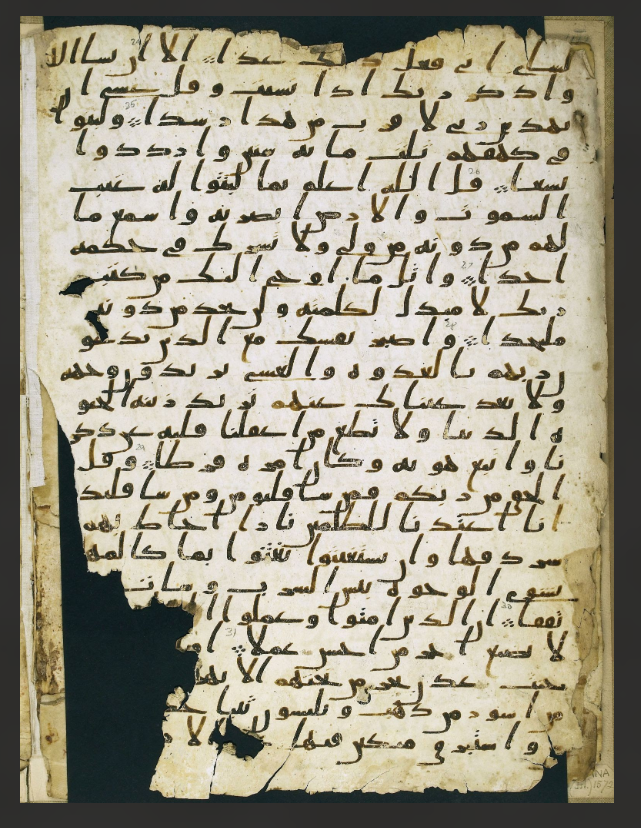
During the Prophet’s lifetime, verses were dictated to designated scribes—including primary figures like Zayd ibn Thabit, Ubayy ibn Ka’b, and Mu’awiyah ibn Abi Sufyan.
Without a centralized bound book (mushaf) during these early years, verses were written on various surfaces:
- Parchment and leather leaves
- Smooth flat stones
- Dried palm fronds
- Shoulder blades of camels and sheep
Oral memorization remained the primary mode of transmission. Many companions (Sahabah) memorized the entire text by heart, earning the title Hafiz.
Compilation into a Single Volume
The transition from individual recorded fragments to a bound manuscript occurred in two distinct phases after the Prophet’s death:
1. The First Compilation (Under Caliph Abu Bakr, ~632–634 CE)
Following the Battle of Yamama, where dozens of Quranic memorizers died, the Prophet’s close companion Omar ibn al-Khattab urged the first Caliph, Abu Bakr, to collect all written fragments into one official master copy.
Abu Bakr appointed Zayd ibn Thabit to lead the effort. Zayd cross-referenced every written manuscript against the oral recitations of at least two independent witnesses before accepting a verse into the master collection.
2. Standardization (Under Caliph Uthman, ~650 CE)
As the Islamic empire expanded across North Africa, Persia, and the Levant, regional variations in Arabic dialects began to cause discrepancies in pronunciation and recitation.
To preserve uniformity, the third Caliph, Uthman ibn Affan, commissioned a committee (again led by Zayd ibn Thabit) to establish an official, standardized codex based on the Meccan dialect of the original revelations.
Copies of this standardized text were dispatched to major imperial centers (Kufa, Basra, Damascus, and Medina), and all non-standard personal copies were retired to prevent future text variations.
Key Takeaway: Prophet Muhammad received and recited the text, designated scribes wrote it down during his lifetime, and Caliphs Abu Bakr and Uthman systematically compiled and standardized it into a unified text.